

If your restaurant has an open-air patio, roll-up doors, a walk-up window, or a front door that stays open during the rush, Florida humidity is pouring into your building all day long. Your AC was never designed to cool and dry the outdoors. So it runs nonstop, can’t pull out enough moisture, and leaves the dining room feeling clammy instead of cool.
That moisture doesn’t just make guests uncomfortable. It settles inside your HVAC system, where it leads to mold, musty smells, dripping vents, and repair bills. Here’s how it happens and what you can do about it without giving up the indoor-outdoor feel your customers love.
How Your Restaurant’s AC Is Supposed to Work
An air conditioner does two jobs at once: it cools the air, and it removes moisture from it. Warm air passes over a cold evaporator coil. The air cools down, and the moisture in it condenses on the coil, drips into a drain pan, and flows out through a condensate line.
That works well in a closed building. The system is sized for a certain amount of indoor air, a certain number of people, and a certain amount of fresh outside air. The coil gets enough time to cool and dry the air before sending it back into the room.
The Real Problem: Your AC Is Fighting the Outdoors
When doors and windows stay open, hot, humid outside air floods in faster than the system can handle. A few things happen at once:
- The AC runs constantly. It never reaches the thermostat setting, so it never shuts off.
- It can’t dry the air fast enough. The coil removes some moisture, but new humid air keeps coming in. The dining room stays sticky even when it’s technically cool.
- The coil and drain pan never dry out. In a normal building, the system cycles off and the coil gets a break. In an open-air restaurant, they stay wet all day, every day.
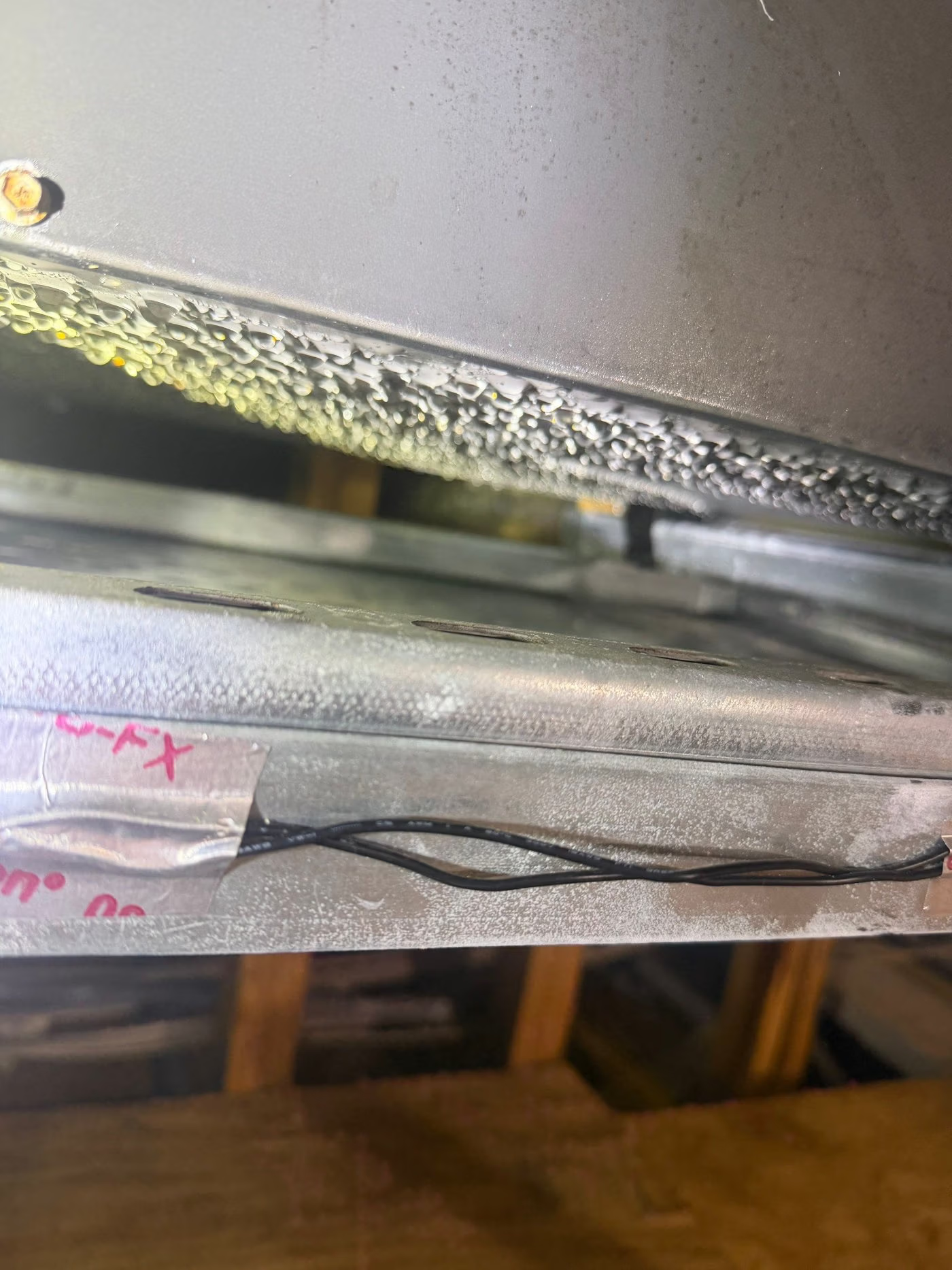
- Ducts start to sweat. Cold supply ducts running through a hot, humid ceiling space collect condensation on the outside, and sometimes on the inside.
Most owners assume the AC is just undersized or getting old. Often, the real issue is the volume of moisture coming through the front door.
What Happens Behind the Ceiling
All that moisture has to go somewhere. In South Florida restaurants, here’s where we typically find it:
1. Mold and Mildew on the Coil and in the Drain Pan
A coil and drain pan that never dry out are the perfect place for mold, mildew, and slime to grow. Add the grease and food particles that kitchens put into the air, and buildup happens fast. That growth is where musty smells start.
2. Sweating Ducts and Dripping Vents
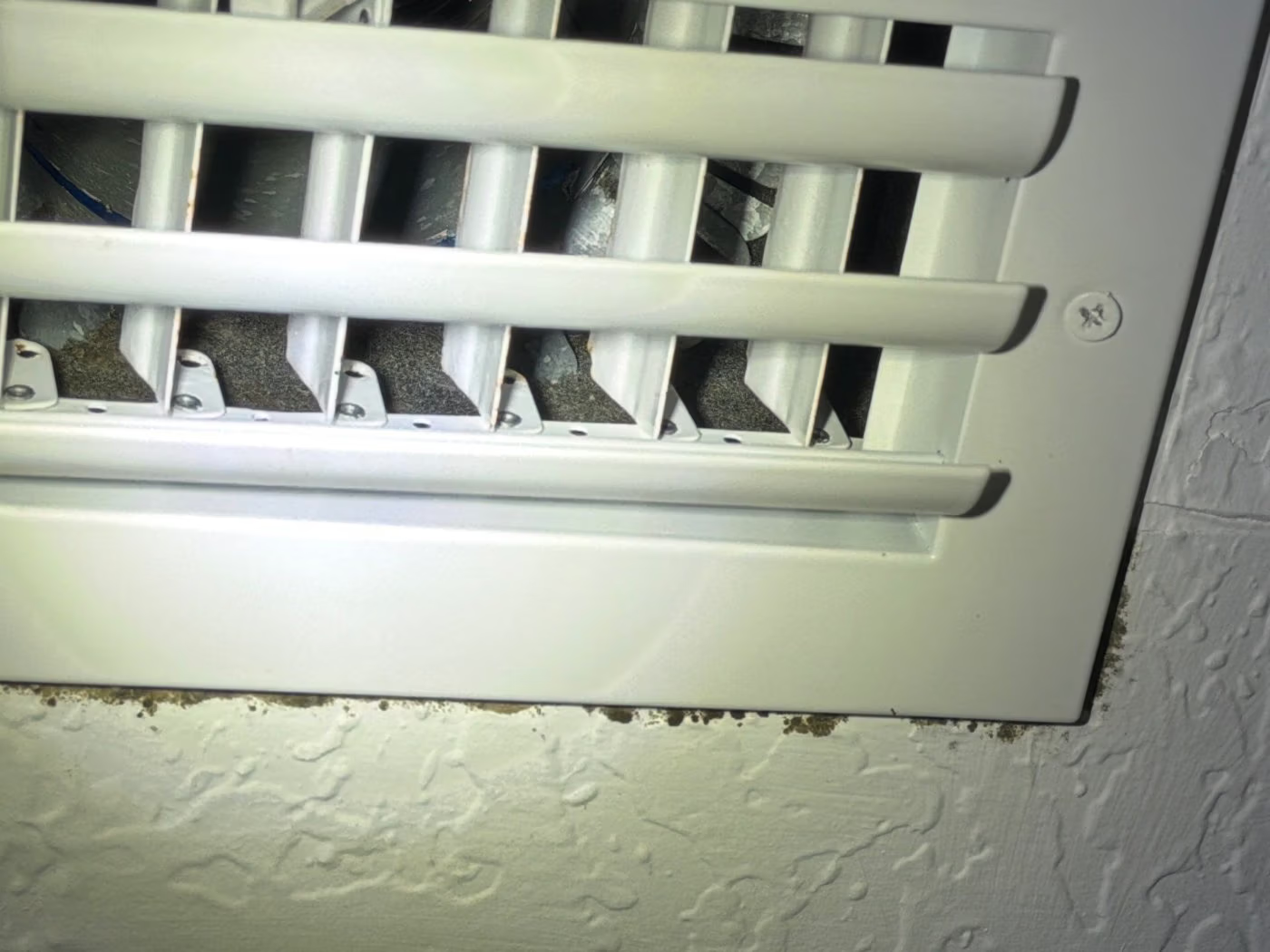
When cold air moves through ductwork in a humid ceiling space, condensation forms. Water can drip from supply vents onto tables, chairs, and guests. It soaks ceiling tiles and leaves brown stains.
3. Wet Duct Interiors and Insulation
Moisture that gets inside fiberglass duct board or insulated flex duct is hard to dry out. Over time, the insulation breaks down, and growth spreads along the inside of the ductwork.
4. Dust That Sticks to Everything
Dust on a damp surface doesn’t blow away. It sticks. Grease and moisture together turn ordinary dust into a sticky film on grilles, blower wheels, and duct walls, which catches even more debris.
Why This Happens So Often in South Florida
Restaurants in Palm Beach, Martin, and Broward Counties deal with humidity that rarely lets up. Summer dew points stay high for months, and even winter brings humid days. Open-air dining is a big part of the South Florida experience, so many restaurants keep doors open most of the year.
Restaurants also often set back or shut off the AC after closing. As the building warms up overnight, moisture settles on every cold surface inside the system. When the AC kicks on the next morning, it blows that damp, musty air into the dining room right before you open.
What It’s Costing You
- Guest comfort and reviews. A clammy dining room or a musty smell when guests walk in is something they notice and mention.
- Health inspections. Water dripping from vents, stained ceiling tiles, and visible growth on grilles are things inspectors notice.
- Energy bills. An AC that never shuts off uses a lot of power, and dirty, wet coils make it even less efficient.
- Equipment life. Constant runtime, corrosion, and clogged drain lines wear out compressors, motors, and coils years early.
- Repairs. Clogged condensate lines overflow, ceiling tiles get replaced, and service calls stack up.
Signs to Watch For
- The dining room feels sticky or clammy even when the thermostat says it’s cool.
- A musty or sour smell when you first open, or near certain vents.
- Water dripping from supply vents or condensation forming on grilles.
- Brown stains or sagging ceiling tiles near vents.
- Dark spots or fuzzy growth on vent grilles.
- The AC runs all day and never seems to catch up.
- Dust collecting in sticky clumps on grilles and return vents.
Practical Steps You Can Take
Start With the Doors
- Air curtains. An air curtain mounted above a busy entrance or roll-up door creates a barrier that cuts down how much humid air gets in, while guests walk right through.
- Better door habits. Close roll-up doors during the hottest, most humid hours, and keep back doors to the kitchen and loading area shut when not in use.
- Don’t shut the AC off completely overnight. A modest setback is better than letting the building heat up and soak in moisture.
Then Deal With What’s Already Inside the System
Fixing the doors helps going forward, but it doesn’t remove the growth and buildup already inside the system. That takes a deep cleaning at the source:
- Air handler cleaning of the coil, drain pan, and blower wheel, where moisture and smells start.
- Air duct cleaning to remove the sticky dust and debris coating the inside of the ducts.
- Mold remediation when growth has spread to ductwork, ceiling tiles, or surrounding materials.
- Duct replacement when years of moisture have soaked and broken down duct board or flex duct beyond cleaning.
- HVAC and air quality consulting to look at whether added dehumidification or system changes make sense for your space.
The EPA recommends keeping indoor humidity below 60% to limit mold growth. That’s a useful target to keep in mind for any South Florida restaurant.
From our job files:
How GreenFox Air Quality Helps Restaurants
GreenFox Air Quality works with restaurants across South Florida to clean HVAC systems at the source. We schedule work before opening, after closing, or on your slow days so you don’t lose service. We use negative air machines with HEPA filtration to keep dust out of your dining room and kitchen, and we provide before-and-after photos so you can see what came out of your system.
Frequently Asked Questions
Why does my restaurant feel humid even with the AC running?
When doors stay open, humid outdoor air comes in faster than the AC can remove the moisture. The system cools the air but can’t dry it enough, so the room feels clammy.
Why are my restaurant’s AC vents dripping water?
Cold air moving through ductwork in a humid ceiling space causes condensation. Dirty or wet ductwork, poor insulation, and clogged drain lines make it worse.
Do air curtains really help?
They can reduce how much hot, humid air gets in through a busy entrance. They work best alongside good door habits and a clean, properly working HVAC system.
Can you clean our HVAC without closing the restaurant?
Yes. We work before you open, after you close, or on your slowest days, and we contain the work so your dining room and kitchen are ready for service.
Final Takeaway
An open-air dining room is part of what makes a South Florida restaurant special. But every open door sends humid air into a system that wasn’t built for it. That moisture ends up as mold, musty smells, dripping vents, and higher bills. Control what comes in through the doors, then clean the coils, air handler, and ducts so the system can do its job.
To schedule an inspection or cleaning, call (561) 206-4307 or contact GreenFox Air Quality. We serve restaurants throughout Palm Beach, Martin, and Broward Counties.
Related Reading
- Can You Clean a Building’s Ducts Without Shutting Down Operations?
- Your Ballroom Hosts 200 Events a Year. When Was the HVAC Last Cleaned?
- Fog Machines, Haze & Pyro: What They Leave Behind in Your HVAC
About the author: Brett Brunsvold is the President of GreenFox Air Quality in West Palm Beach. He holds CIE, CAC, MRSA, MRSR, and CRMS credentials and has spent years inspecting and cleaning HVAC systems in South Florida homes and commercial buildings.
