
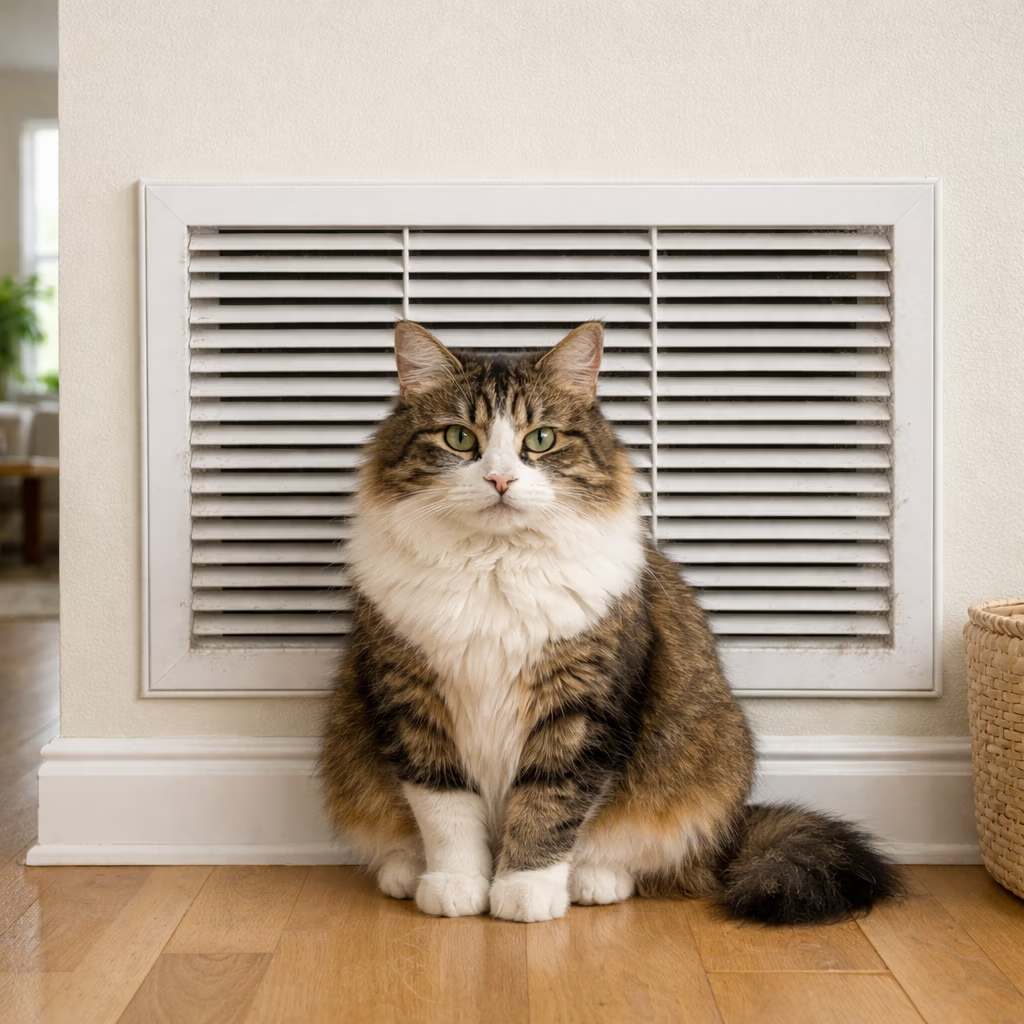
You already know about the fur on all of your furniture. But there’s one place some cat owners never think to check — and it may matter most: your HVAC system. Cat hair and dander get pulled into your return vents, travel through your ductwork, and accumulate deep inside your air handler. According to NADCA (the National Air Duct Cleaners Association), contaminants recirculate through the average home’s HVAC system five to seven times per day. In South Florida, where AC runs nearly year-round and homes stay tightly sealed, the buildup is faster and the consequences more serious.
How Cat Hair Moves Through Your HVAC System
The problem starts at your return grilles. When the system runs, it draws air — and everything in it — through low-MERV filters that catch larger debris but allow microscopic particles to pass right through. Cat dander (the allergenic protein Fel d 1) rides on particles as small as 1–2.5 microns, according to published research in the Journal of Allergy and Clinical Immunology. At that size, standard fiberglass filters are essentially no barrier at all.
From there, fur wraps around blower wheel fins, reducing the wheel’s ability to move air. The evaporator coil is hit hardest: cold, slightly damp from condensation, it acts like a lint trap for pet hair and dander. Once that layer forms, it insulates the coil from the passing air, cutting heat transfer efficiency and forcing your system to run longer. Contamination then moves into supply ducts, where it gets redistributed into every room every time the system cycles.
Why South Florida Homes Are More Vulnerable
Florida’s outdoor humidity regularly exceeds 70%, and the EPA recommends keeping indoor humidity between 30–50% to prevent mold. When humidity climbs above 60%, mold can begin colonizing HVAC components — and a coil already matted with pet hair gives it an ideal surface. Because South Florida homes run AC nearly year-round in sealed environments, there’s no seasonal break where the system dries out or contaminants dissipate. That continuous operation means more airflow, more buildup, and a faster path to coil contamination, microbial growth, and degraded indoor air quality.
Signs Your AC System Is Contaminated with Pet Hair
Your system won’t send you an alert. But it will show signs:
Reduced airflow from registers. A clogged blower wheel or matted coil can’t move designed air volumes. Rooms that once cooled quickly now feel sluggish.
Musty odor when the AC kicks on. Pet hair buildup on a humid coil creates conditions for microbial growth. That smell following you room to room is a red flag.
More dust on surfaces near vents. Duct walls coated in debris redistribute particles throughout the home every cycle.
Allergy or asthma flare-ups at home. Research from PMC (National Library of Medicine) shows that poorly maintained HVAC systems can actually increase respiratory symptoms rather than reduce them — especially for those sensitized to cat allergen.
Higher energy bills or uneven cooling. A compromised coil and blower reduce system efficiency. You pay more to achieve less.
What Professional HVAC Remediation Involves
At GreenFox, our process covers: negative air containment to protect your living space during cleaning; HEPA vacuuming (any vacuum exhausting indoors must be HEPA-filtered per NADCA guidelines); evaporator coil cleaning to restore heat transfer efficiency; blower wheel decontamination; full duct cleaning; and upgraded filtration recommendations tailored to your system’s capacity.
Preventative Strategies for Cat Owners
Remediation addresses existing contamination. The right habits slow re-accumulation between professional cleanings:
Upgrade your filter — but carefully. For homes with cats, industry points to MERV 8–11 as the effective range for capturing pet dander without over-restricting airflow. A MERV 11 filter captures 85%+ of particles in the 3–10 micron range. Don’t jump to MERV 13+ without confirming your system can handle the increased static pressure.
Maintain your return grilles. Vacuum them monthly. Visible hair buildup at the return is an early warning that your system interior needs attention.
Consider inline media filtration. For multi-cat households or allergy sufferers, a whole-home inline filter provides a secondary filtration stage with longer service life than standard 1-inch filters.
Schedule annual coil inspections. In South Florida’s year-round cooling climate, annual coil checks — not just filter swaps — should be part of every pet owner’s maintenance plan.
