
When standard duct cleaning isn’t enough, it’s time to bring in the big guns. If you’ve ever wondered how professional air duct cleaning companies tackle seriously contaminated or heavily built-up ductwork, the answer often comes down to the tools they use. One of the most effective agitation tools in the industry is the Nikro Air Duct Whip Blast System — and if you’re a homeowner or facility manager looking to understand what a thorough duct cleaning actually involves, this breakdown is for you.
So, What Exactly Is a Nikro Air Duct Whip?
A Nikro air duct whip is a pneumatically driven duct-cleaning agitation tool — meaning it runs entirely on compressed air. Rather than relying on brushes alone or simple vacuuming, this tool is designed to physically agitate and dislodge contaminants that have bonded to the interior walls of your ductwork over time.
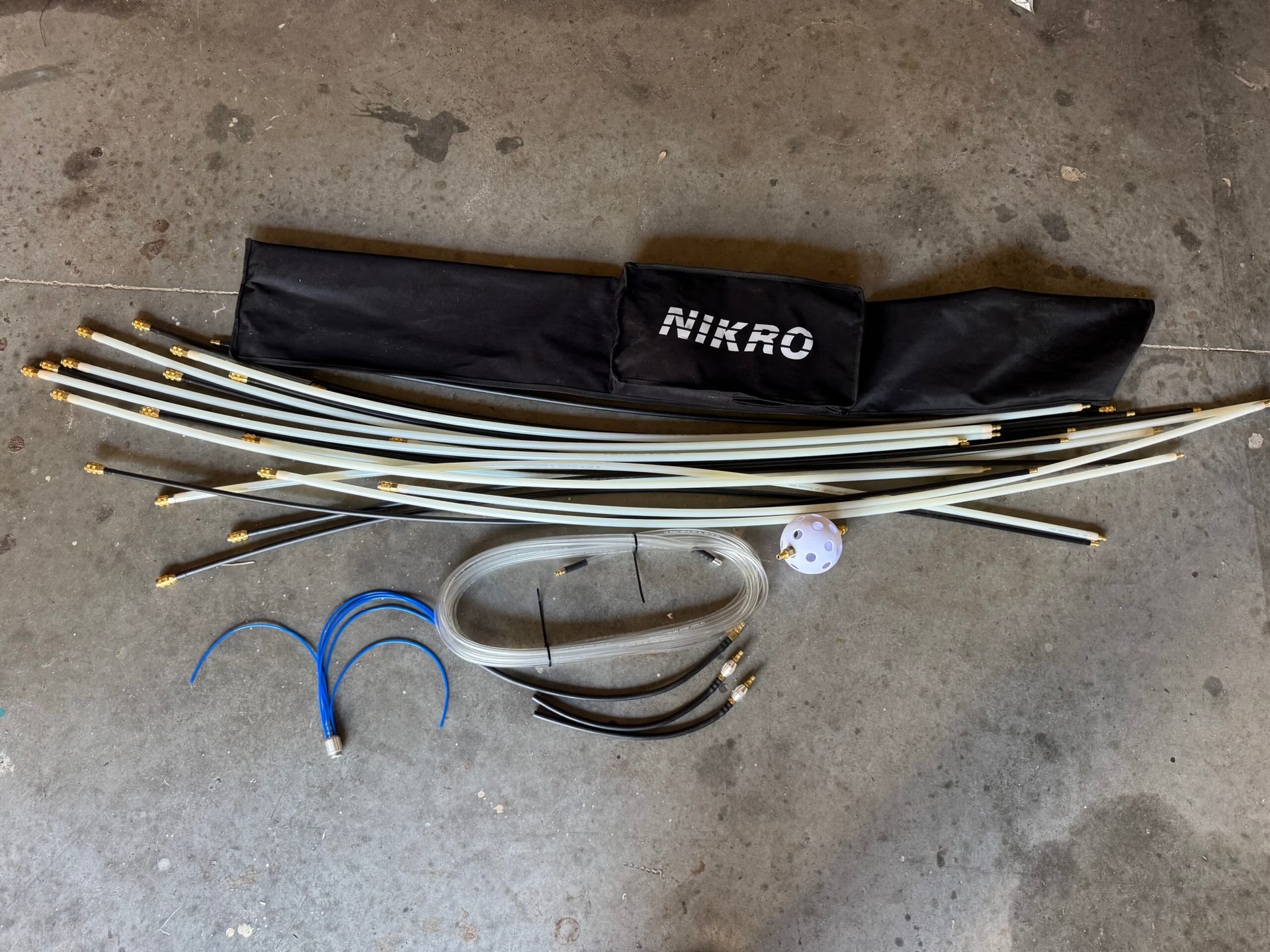
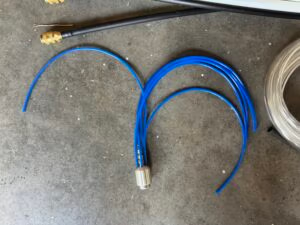
Here’s how it works: the whip assembly is fed directly into your supply or return ductwork via a reinforced airline. Once air pressure is applied, multiple flexible “whip” attachments rapidly expand, retract, and spin in a high-energy motion along the duct interior. That agitation is intentional — it’s engineered to knock loose contaminants from every surface of the duct, reaching areas that a standard brush simply can’t.
In plain terms: it beats loose dust, debris, and microbial buildup from the duct walls — without cutting, grinding, or causing any damage to the duct itself.
Nikro’s 25′ Whip and Blast System is one of their flagship tools, and notably, it’s designed to be flexible yet rigid enough to prevent the nozzle from curling back toward the operator — an important safety and performance feature. The system includes an air control valve and an assortment of whip tips and nozzles, giving technicians the versatility to tackle different duct configurations.
How It Works with a Vacuum System
The whip doesn’t work alone. There are two key components to any proper HVAC cleaning: breaking contaminants loose, and collecting them. The Nikro whip handles the first part aggressively; a powerful negative-pressure vacuum system handles the second.
During cleaning, the entire HVAC system is placed under continuous negative pressure to prevent dislodged contaminants from spreading into your living or working space. As the whip agitates debris from the duct walls, it is immediately drawn toward the vacuum collection system and removed entirely. NADCA also notes that pneumatic devices like air whips are often used specifically to drive agitated debris toward the collection device — so the two systems work in tandem.
What Does It Remove?
The whip blast system is effective at dislodging contaminants that have built up over years of normal HVAC operation, including:
- Accumulated dust and compacted debris
- Microbial buildup, including mold spores and biological matter
- Pet dander, pollen, and allergens embedded in duct surfaces
- Construction debris left behind from renovations or new builds
- Loose particles that have settled into duct seams and corners
Everyday life generates a constant stream of contaminants — and that these particles get pulled into your HVAC system and recirculated an average of five to seven times per day. Over time, that buildup becomes significant, and light cleaning methods won’t cut it.
When Is a Nikro Whip System the Right Choice?
The Nikro whip truly shines in specific situations. It is best suited for large rigid metal ductwork — the kind commonly found in commercial buildings, older homes, and HVAC systems with wide trunk lines. The added force of compressed air delivers extra cleaning power where a lighter approach won’t be effective.
It’s a particularly smart choice when:
- The ductwork hasn’t been cleaned in many years (or ever)
- There’s visible debris, dust buildup, or suspected microbial growth
- The system services a large square footage with long duct runs
- Post-construction cleaning is needed after a renovation or new build
- A previous cleaning left behind stubborn, compacted contamination
It’s important to note that fiberglass-lined metal ductwork, flex duct, and duct board can be damaged by overly aggressive removal techniques. This is why a professional assessment before any cleaning is always the right first step. Nikro’s whip system is designed for rigid metal; other duct types require a different approach.
Nikro Whip vs. Other Cleaning Methods
NADCA recognizes several categories of agitation tools used in professional duct cleaning, including brushes, air whips, compressed air nozzles, and skipper balls. Here’s how they compare:
| Method | Best For | Agitation Level |
|---|---|---|
| Rotary Brush | Flexible or smaller ductwork | Moderate |
| Air Whip (Nikro) | Large rigid metal ductwork | High |
| Forward/Reverse Air Blast | Pushing or pulling debris toward vacuum | Moderate-High |
| Hand Brushing | Spot cleaning and registers | Low |
| Vacuum Only | Light maintenance | Minimal |
The Nikro whip system occupies the high-agitation tier and is often paired with forward or reverse air blast nozzles for maximum effectiveness on large systems.
Is It Safe for My Ductwork?
Yes — when operated by a trained professional on appropriate duct systems. The flexible whip attachments are designed to deliver energy into debris rather than into the duct walls themselves. Nikro also engineers their line to be flexible enough to navigate curves and elbows while remaining rigid enough to perform effectively.
NADCA’s standards are clear that all cleaning methods must avoid damaging HVAC components or compromising system integrity — and certified technicians are trained to select the right tool for the right job.
The GreenFox Approach
At GreenFox Air Quality, we use industry-leading tools like the Nikro Air Duct Whip Blast System because we believe clean air starts with a genuinely thorough clean. Our technicians follow NADCA best practices and assess your specific duct system before selecting the right combination of tools and techniques for the job.
Whether your home or facility is overdue for a cleaning, dealing with air quality concerns, or coming out of a renovation, we’re here to help you experience improved air distribution.
Ready to schedule your duct cleaning? Contact GreenFox Air Quality today.
Questions about our process or the tools we use? We love educating our customers, feel free to reach out anytime!
