
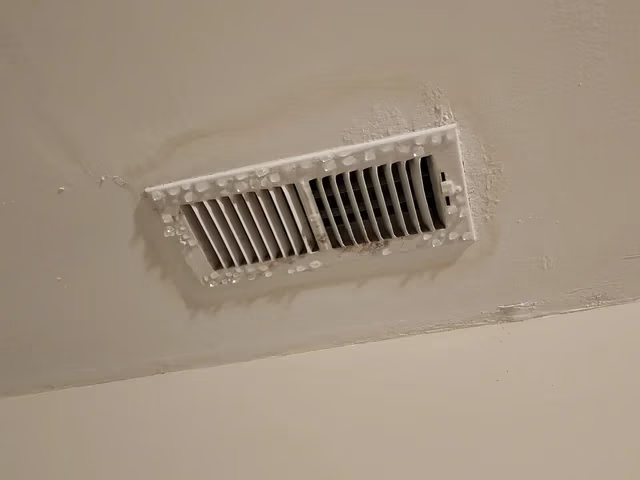
Why Is There Condensation on My Supply Air Vents?
Have you ever noticed water droplets forming around your air conditioning supply vents? While it may seem like a minor issue, condensation on AC vents is often a sign that something isn’t quite right with your home’s HVAC system or indoor environment.
In South Florida, where high humidity is part of everyday life, vent condensation is one of the most common concerns homeowners experience. Although it may occasionally be harmless, persistent condensation can lead to ceiling stains, damaged drywall, mold growth, and reduced HVAC efficiency if left unresolved.
At Green Fox Air Quality, we help homeowners throughout Palm Beach County identify the root cause of condensation problems—not just treat the symptoms. Here’s what you need to know.
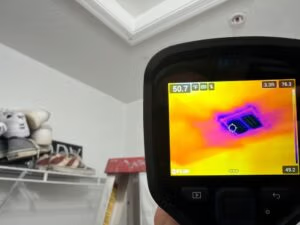
What Causes Condensation on AC Supply Vents?
Condensation occurs whenever warm, humid air comes into contact with a surface that is colder than the air’s dew point. Your air conditioning system delivers air that is typically between 52°F and 58°F through the supply vents. If the surrounding room air contains excessive moisture, water vapor
condenses on the cold metal register, much like moisture forming on a cold beverage.
The question isn’t simply why water is forming—it’s why enough moisture is present for condensation to occur.
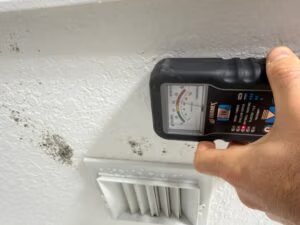
1. High Indoor Humidity
The most common cause of sweating supply vents is excessive indoor humidity.
South Florida homes constantly battle moisture infiltration from:
- Frequently opening exterior doors
- Air leaks around windows and doors
- Poor attic sealing
- Leaky ductwork
- Oversized HVAC systems
- Inadequate dehumidification
- Running the fan continuously instead of Auto
Ideally, indoor relative humidity should remain between 45% and 55%. Once humidity climbs above approximately 60%, condensation becomes much more likely.
Signs of excessive humidity include:
- Sticky or clammy indoor air
- Foggy windows
- Musty odors
- Mold growth
- Condensation on vents or ductwork
2. Air Leaks Around the Supply Register
Many homeowners don’t realize that conditioned air isn’t always the only air moving through a ceiling vent.
If the opening around the register boot wasn’t properly sealed during installation, humid attic air can leak into the conditioned space around the vent. When this warm attic air meets the cold metal register, condensation forms almost immediately.
This is especially common in:
- Older homes
- Homes with recessed lighting nearby
- Improperly sealed drywall openings
- Poorly installed register boots
At Green Fox Air Quality, we frequently seal these penetrations using approved sealants or foam to reduce air leakage and improve system performance.
3. Dirty Air Filters
A clogged air filter restricts airflow across the evaporator coil.
Reduced airflow causes the coil temperature to drop lower than normal, producing colder supply air. Colder vents increase the chance that surrounding moisture will condense.
Replacing your air filter every 30–90 days, depending on the filter type and your home’s conditions, helps maintain proper airflow and system efficiency.
4. Restricted Airflow
Anything that limits airflow can contribute to vent sweating.
Common causes include:
- Closed supply registers
- Dirty evaporator coils
- Dirty blower wheels
- Blocked return air pathways
- Collapsed or damaged ductwork
- Undersized return ducts
When airflow decreases, the supply air often becomes excessively cold, increasing condensation risk.
5. Oversized Air Conditioning System
Bigger isn’t always better.
An oversized AC system cools the home very quickly but doesn’t run long enough to adequately remove moisture from the air.
This leaves homeowners with:
- Cool temperatures
- High humidity
- Poor comfort
- Sweating vents
- Increased mold potential
Proper equipment sizing using a Manual J load calculation is essential for balancing cooling capacity with humidity removal.
6. Low Refrigerant or Mechanical Problems
In some cases, vent condensation can be related to mechanical issues.
Low refrigerant, airflow problems, or dirty evaporator coils may cause the coil to operate at temperatures below normal.
Possible symptoms include:
- Ice forming on refrigerant lines
- Frozen evaporator coil
- Weak airflow
- Longer run times
- Poor cooling performance
These issues should always be evaluated by a qualified HVAC professional.
7. Poor Insulation Around Ductwork
If supply ducts or register boots are missing insulation, warm humid air in the attic can cool rapidly against exposed metal.
Over time this may produce:
- Sweating ductwork
- Water dripping from ceilings
- Wet insulation
- Ceiling stains
- Mold growth around supply vents
Properly insulated duct systems significantly reduce condensation.
8. Continuous Fan Operation
Many thermostats allow the fan to run continuously.
While this may seem beneficial, continuous fan operation can actually increase indoor humidity.
When the compressor shuts off, moisture remaining on the evaporator coil is blown back into the home instead of draining away.
Unless continuous air circulation is specifically needed, most homeowners should leave the fan setting on Auto.
Is Condensation on Supply Vents Dangerous?
Occasional condensation during extremely humid weather may not indicate a serious problem.
However, persistent moisture should never be ignored because it can lead to:
- Mold growth
- Ceiling damage
- Peeling paint
- Rusted registers
- Damaged drywall
- Wet insulation
- Reduced HVAC efficiency
- Poor indoor air quality
Addressing the underlying cause early often prevents much larger repairs later.
How Green Fox Air Quality Diagnoses Condensation Problems
Rather than simply replacing vents, our technicians perform a comprehensive evaluation to determine why condensation is occurring.
Our inspection may include:
- Measuring indoor relative humidity
- Checking supply air temperatures
- Evaluating airflow
- Inspecting duct leakage
- Examining register boot sealing
- Assessing attic conditions
- Inspecting insulation levels
- Evaluating evaporator coil cleanliness
- Checking blower performance
- Looking for microbial growth around affected areas
Finding the true source of the moisture is the key to providing a lasting solution.
How to Prevent Supply Vent Condensation
Homeowners can reduce the likelihood of condensation by:
- Keeping indoor humidity between 45% and 55%
- Replacing air filters regularly
- Leaving the thermostat fan on Auto
- Scheduling annual HVAC maintenance
- Sealing air leaks around supply vents
- Keeping evaporator coils clean
- Maintaining proper refrigerant charge
- Ensuring ductwork is properly insulated
- Repairing damaged or leaking ducts
- Addressing attic air leakage
Routine maintenance helps catch many of these issues before they become costly repairs.
When Should You Call a Professional?
If you notice any of the following, it’s time to have your system inspected:
- Water dripping from supply vents
- Ceiling stains around registers
- Mold developing around vents
- Persistent condensation even after changing the filter
- High indoor humidity
- Weak airflow
- Musty odors
- Uneven cooling throughout the home
These symptoms often indicate underlying HVAC or building envelope issues that should be corrected before additional damage occurs.
Final Thoughts
Condensation on AC supply vents is more than just an inconvenience—it is often a warning sign that your home has excessive humidity, poor airflow, duct leakage, insulation deficiencies, or another HVAC-related issue.
While wiping away the water may temporarily solve the symptom, correcting the underlying cause is what protects your home, improves energy efficiency, and maintains healthy indoor air quality.
If you’ve noticed sweating vents, ceiling stains, or persistent indoor humidity, Green Fox Air Quality can perform a detailed inspection to identify the source of the problem and recommend the most effective solution.
Our goal is simple: help South Florida homeowners enjoy cleaner air, healthier homes, and HVAC systems that perform the way they were designed to.
Ready to Solve Your AC Vent Condensation for Good?
Sweating vents are a warning sign—don’t wait for ceiling stains or mold to set in. Contact Green Fox Air Quality at (561) 206-4307 to schedule your comprehensive airflow and humidity evaluation today.
