
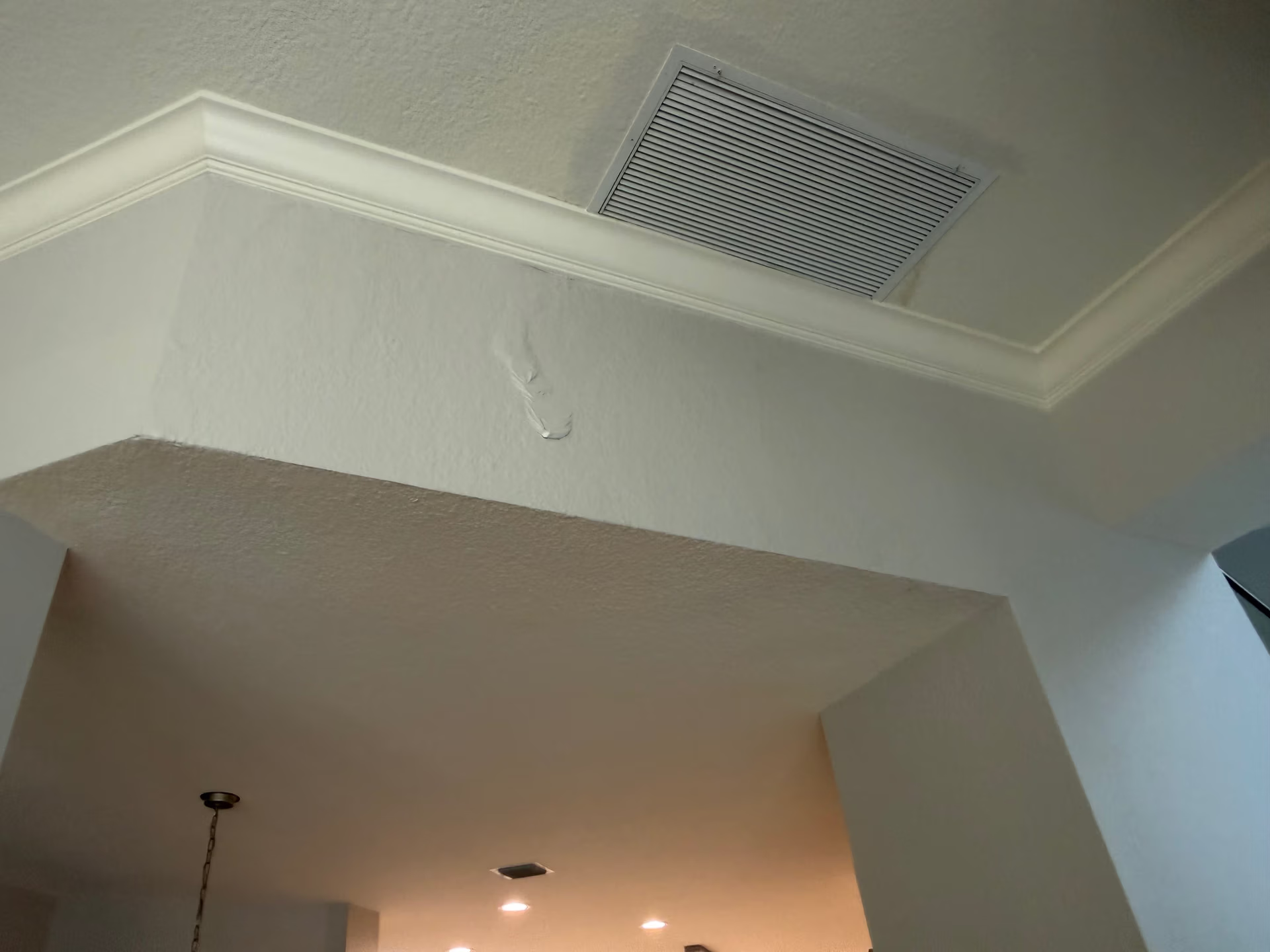
During professional mold remediation, containment barriers are installed to isolate affected areas and prevent contaminants from spreading to clean spaces. While most remediation teams focus on walls, doorways, and flooring, one critical detail is often overlooked: HVAC return plenums and return vents located inside or near the containment area.
Failing to properly address returns can allow mold spores and debris to travel through the HVAC system, undermining the entire remediation effort and putting occupants at continued risk.
Why Return Plenums Matter in Mold Remediation
HVAC systems are designed to circulate air throughout a structure. During mold remediation, any opening connected to that system becomes a potential pathway for contamination. Return plenums, in particular, pose a significant risk if they are located inside containment or too close to it.
Whenever possible, remediation containment should be designed to avoid enclosing return plenums altogether. Keeping returns outside the containment zone significantly reduces the risk of cross-contamination and simplifies the remediation process.
However, real-world building layouts, existing duct configurations, or limited work areas do not always make avoidance feasible. When return plenums fall within or immediately adjacent to containment, they must be fully sealed, airflow carefully controlled, and additional cleaning and verification steps implemented to prevent contaminants from entering the HVAC system.
Below are three key reasons return plenums require special attention during remediation.
Three Critical Reasons Return Plenums Must Be Covered
1. Return Plenums Actively Pull Contaminated Air Into the HVAC System
Return plenums are designed to draw air from occupied spaces back to the air handler. When a return is located inside a containment area and left uncovered, it can actively pull:
- Mold spores
- Dust and debris
- Disturbed microbial material
directly into the HVAC system. Once inside, these contaminants can be distributed through ductwork to other areas of the building, spreading the problem instead of containing it.
2. Negative Pressure Increases the Risk of Contamination
Mold remediation containments are typically maintained under negative pressure using air scrubbers and HEPA filtration. This pressure differential is essential for keeping contaminants from escaping into adjacent areas.
However, negative pressure also increases airflow movement within the containment. An uncovered return plenum becomes a high-risk entry point, allowing contaminated air to bypass filtration controls entirely and enter the HVAC system. This defeats the purpose of containment and compromises indoor air quality throughout the structure.
3. Cross-Contamination Can Compromise Post-Remediation Results
Even when remediation and cleaning are performed correctly, contaminants pulled into the HVAC system can remain hidden until the system is reactivated. Once airflow resumes, these particles may be reintroduced into living or working spaces, leading to:
- Persistent musty odors
- Elevated mold spore counts
- Failed Post-Remediation Verification (PRV) results
In many cases, this results in additional cleaning, duct remediation, clearance delays, and increased costs for property owners.
Understanding the Difference: Supply vs. Return Inside Containment
Not all HVAC openings pose the same level of risk during mold remediation, and it’s important to distinguish between supply vents and return vents or plenums.
Supply Vents
Supply vents deliver conditioned air into a space. During remediation, HVAC systems are typically shut down and supply vents are sealed to prevent airflow. While they should always be covered, supply vents do not actively pull air from the containment when the system is off.
Return Vents and Return Plenums
Return vents and plenums pull air from the space back into the HVAC system. Even small pressure differentials can cause airflow into the return. When left uncovered inside containment, returns act as a direct channel for contaminants, making them significantly higher risk than supply vents.
Best Practices for Managing Return Plenums During Remediation
Avoid Returns in Containment Whenever Possible
- Design containment boundaries to exclude return plenums whenever feasible
- Relocate containment walls or adjust work zones to keep returns outside contaminated areas
- This reduces risk and minimizes the need for additional HVAC cleaning
When and Where to Seal Returns
When avoidance is not possible, proper sealing is mandatory:
- All return openings within the containment zone must be fully sealed using 6-mil plastic sheeting or other durable, airtight barriers
- Sealing must be continuous, with no gaps, using tape designed for containment applications
- In some cases, duct masking film or taped cardboard covers may be used, but only if they form a complete, airtight seal
- Returns located just outside the containment zone may also need to be covered if there is a risk of air exchange or pressure imbalance
Cleaning Returns After Remediation
After remediation is complete and before reactivating the HVAC system, additional steps are required:
- Dust and debris accumulated around sealed returns must be thoroughly cleaned
- In many cases, duct cleaning of impacted or adjacent zones is recommended to remove any spores or debris that may have bypassed containment barriers
- HVAC systems should only be restarted after clearance protocols are met
Documentation and Verification
Professional remediation requires accountability:
- All protective measures, including return vent sealing, should be documented in the remediation plan
- Photos and notes should verify that returns were sealed prior to disturbance
- Final clearance testing, when performed, should confirm that no cross-contamination occurred through return ducts
Taking the Next Steps Toward Cleaner, cleaner air distribution
Proper containment is more than a checklist, it’s a commitment to protecting indoor air quality and the people who rely on it. Avoiding return plenums whenever possible, and properly sealing, cleaning, and verifying them when unavoidable, is a small step that makes a measurable difference in remediation outcomes.
At GreenFox, attention to these details reflects a broader approach to environmental responsibility, technical excellence, and cleaner indoor spaces.
