
There’s one question IAQ professionals hear on almost every job: “Do we have to leave while you treat it?”
With an ozone machine, the answer is always yes. With a hydroxyl maximizer, however, it’s not. And the reason why comes down to some pretty fascinating science.
What Is Hydroxyl?
Hydroxyl radicals (•OH) sound technical, but they’re completely natural. Sunlight hits water vapor and oxygen in the air every day, and as a result, hydroxyl radicals form outdoors continuously. Scientists call them the “detergent of the atmosphere” because they silently break down pollutants, mold, bacteria, and odors outside — all on their own.
Here’s the important part: hydroxyl radicals are naturally present in outdoor air. We breathe them in every time we step outside — and they pose no risk at naturally occurring concentrations.
So What Does a Hydroxyl Maximizer Do?
Simply put, it recreates that natural outdoor process inside your space. And it does it using something you already have at home — water.
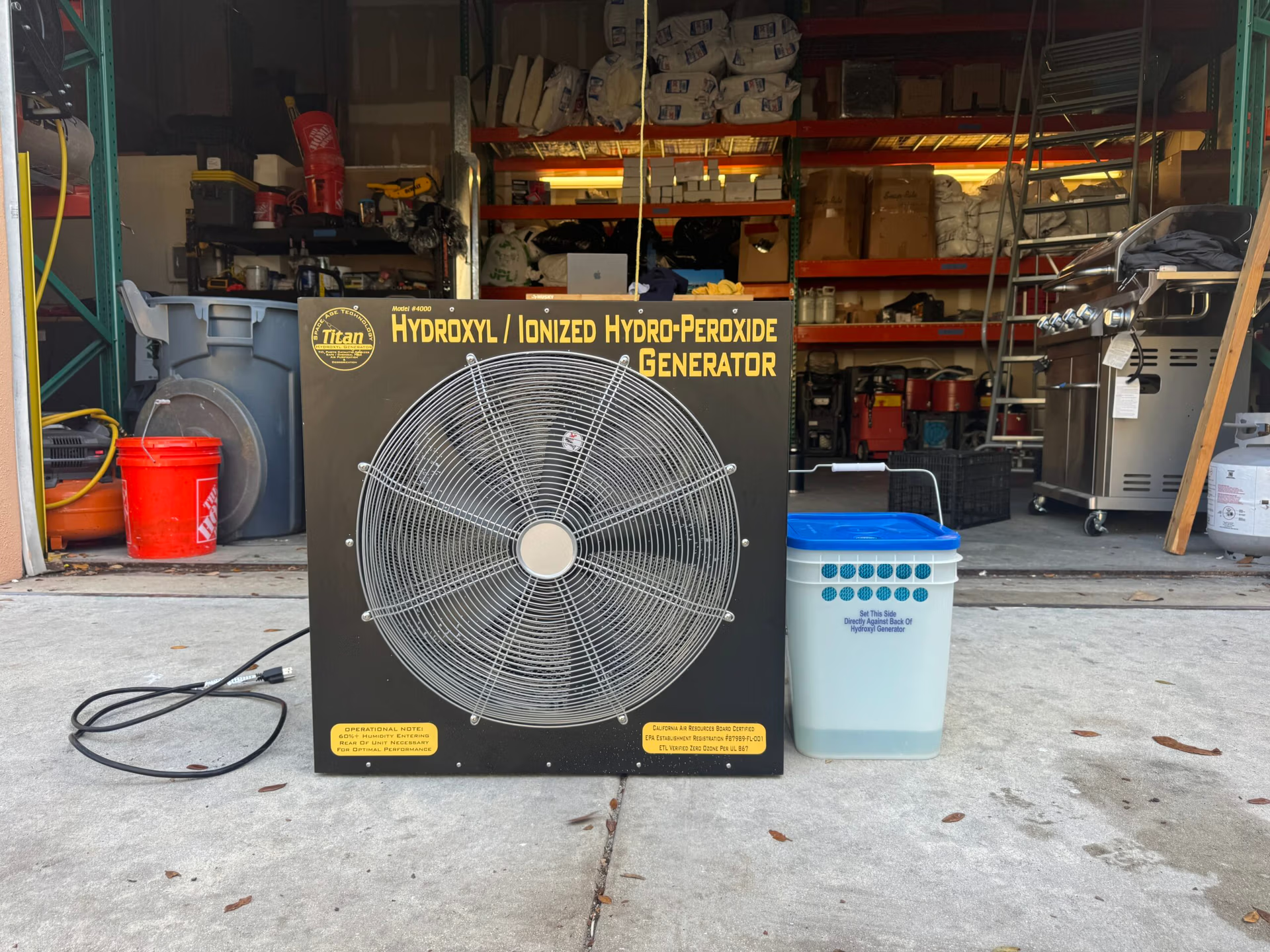
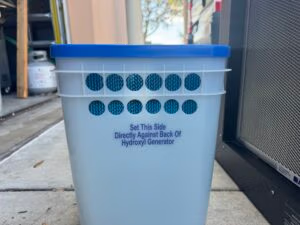
A bucket of water sits against the back of the machine. The unit pulls in that moist air and runs it past UV lamps. Those lamps trigger a reaction that adds an extra oxygen atom to water (H₂O), turning it into hydrogen peroxide vapor (H₂O₂). Think of it like the same peroxide you use to clean a cut — but instead, it becomes a fine invisible mist that fills the entire room.
That mist carries hydroxyl radicals and other reactive oxygen species throughout the space. Because the particles are incredibly small, they act like a gas — drifting into corners, vents, wall cavities, and porous surfaces that no manual cleaning can reach. As soon as those particles hit odor molecules, mold spores, bacteria, or viruses, they break them down through oxidation. The only things left behind are water and oxygen.
Why Can People Stay in the Room?
Ozone machines use similar chemistry — but ozone (O₃) irritates and damages the lungs at treatment concentrations. As a result, the EPA requires everyone to evacuate, and someone must ventilate the space before anyone returns.
The hydroxyl maximizer, by contrast, produces the same chemistry already present in fresh outdoor air. The radicals break down quickly and never build up to unsafe levels. Manufacturers like Titan independently test their units — the Titan 4000, for example, carries ETL verification and EPA Establishment Registration, confirming zero harmful ozone output per UL 867 standards.
Therefore, treatments can run in homes, offices, hotels, and job sites with people present.
What Does It Treat?
- Smoke and fire odors — destroys the molecules causing the smell, not just masks them
- Mold and mildew — kills spores and helps prevent regrowth
- Bacteria and viruses — research shows a 99.99% kill rate across a wide range of pathogens
- VOCs from paint, flooring, and new furniture off-gassing
- Pet odors, cooking smells, and musty air
Why Is It Called a “Maximizer”?
The name comes from how the machine is engineered. The water bucket at the rear intake isn’t optional — it’s essentially the fuel. More humidity flowing in means more hydroxyl output. Because the unit actively optimizes that reaction, it produces significantly more hydroxyl than a standard UV air purifier. That’s the difference.
The Bottom Line
Overall, the hydroxyl maximizer brings the air-cleaning power of the outdoors inside. It’s safe, it’s effective, and — unlike ozone — it works while your clients are still in the building. For any IAQ professional serious about delivering better results, it’s a very practical tool.
Have questions about the hydroxyl maximizer or want to find out if it’s the right fit for your space? We’d love to help. Give GreenFox a call at 561-206-4307 — we’re happy to walk you through everything.
