
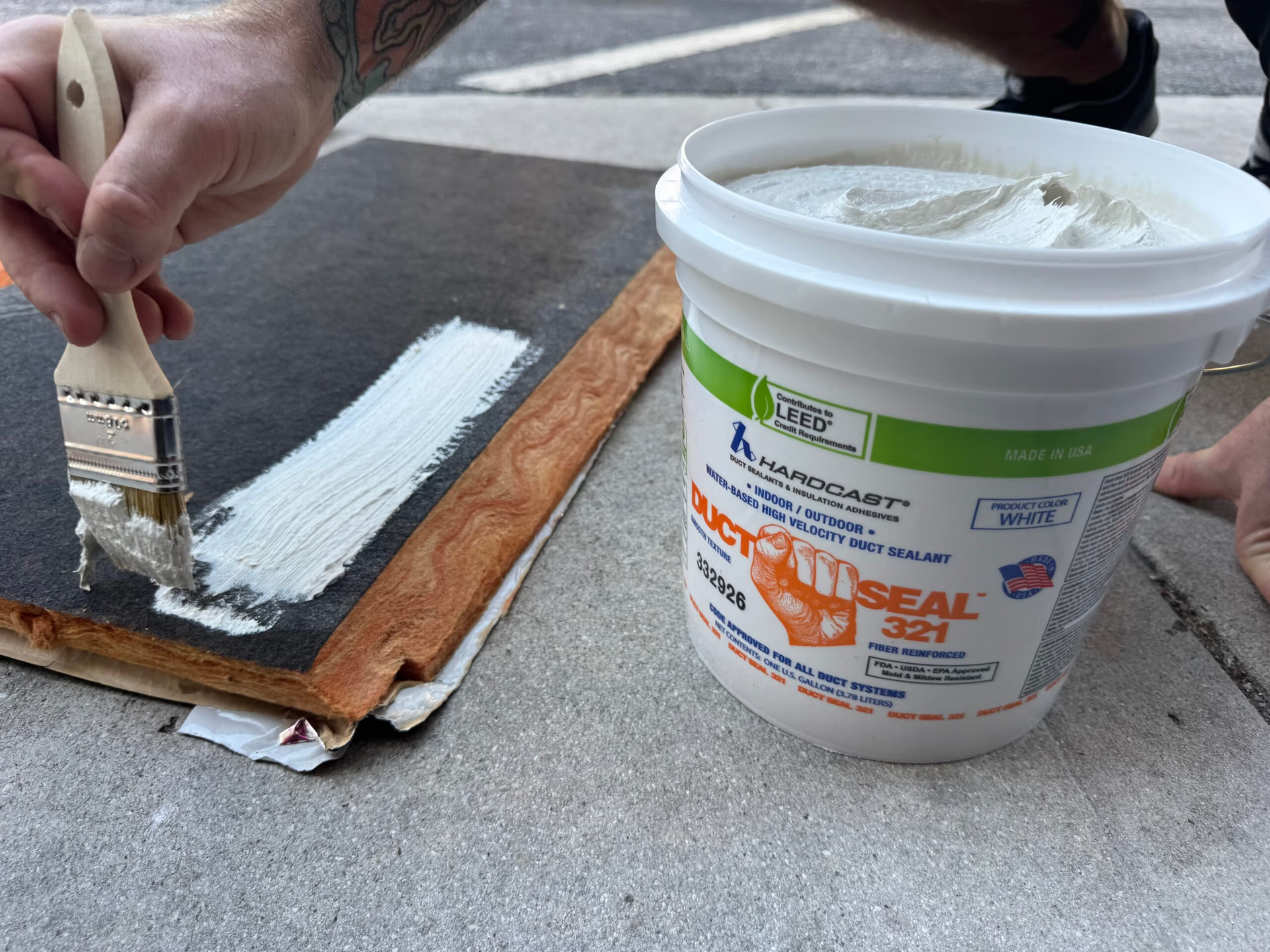
At GreenFox Air Quality, we use professional-grade duct sealant on a lot of our jobs. Here’s a breakdown of what it is, what the best products look like, and exactly how our technicians put it to work.
What Is Duct Sealant?
Duct sealant — also called mastic — is a thick, paste-like compound formulated specifically to seal the seams, joints, and connections in HVAC ductwork. It’s typically water-based and made from acrylic or latex binders. Professional products like the Hardcast Duct Seal 321 shown in the photo above take it a step further with chopped fiberglass fibers mixed in, which gives the cured sealant real tensile strength so it won’t crack when ducts expand and contract with temperature changes.
The product in the bucket — Hardcast’s 321 — is a go-to in the industry for good reason. It’s rated for both indoor and outdoor use, approved for high-velocity duct systems, and carries FDA, USDA, and EPA approval. It also contributes to LEED credit requirements, which matters for commercial projects. Once it cures, it bonds hard to sheet metal, duct board, and flex duct alike, and it stays bonded for the life of the system.
How Professionals Apply Duct Sealant
The application process looks simple from the outside, but there’s a right way to do it that most shortcuts skip. Here’s how a professional duct sealing job actually runs:
- Clean the surface first: Mastic won’t bond to dusty or greasy metal. Techs wipe down every seam before the brush ever touches it.
- Apply a generous coat: Using a chip brush or a gloved hand, the sealant gets worked into every seam, joint, and connection point. A good coat is roughly 1/8 inch thick — thin spots are weak spots.
- Embed mesh tape on larger gaps: Any gap wider than about 1/4 inch — common on aged duct board or at collar connections — gets fiberglass mesh tape pressed into the wet mastic first. A second coat goes over the top, fully encapsulating the tape.
- Let it cure completely: Duct sealant needs to dry before the system runs. In a hot South Florida attic that might be a couple of hours; in a cooler or more humid space, it can take longer. Running the system too soon pushes wet sealant off the seam.
- Test the result: On a thorough job, a duct leakage test confirms the sealing actually reduced leakage before the job is called done.
A full residential sealing job done properly takes time — sometimes two to three hours just on the accessible ductwork, not counting hard-to-reach areas in attics and crawl spaces. Contractors who rush it with tape are cutting corners on the step that matters most.
Where Duct Sealant Gets Used on the Job
Mastic duct sealant isn’t just for one part of the system. Here’s where a thorough tech will apply it:
- Duct seams and joints: Every longitudinal seam and transverse connection on sheet metal or duct board — the primary application.
- Collar and boot connections: Where flex duct meets a collar, and where a boot meets the floor or ceiling. These joints move constantly and are among the most common leak points.
- Air handler cabinet: The cabinet itself leaks more than most homeowners realize. Access panel edges, drain pan areas, and factory seams all get sealed.
- Plenum boxes: Supply and return plenums sit under high pressure and are a major source of duct leakage if left unsealed.
- Custom duct board fabrication: When techs build sections of duct board on-site, every cut edge and joint gets mastic before the piece goes in.
- Retrofit and repair work: On older systems with failed duct tape, the tape gets stripped and mastic takes its place. It’s the right fix for aged ductwork that hasn’t been touched in years.
Why Not Just Use Duct Tape?
It’s the most common question we get. Standard cloth duct tape — the kind most people have in their garage — is actually prohibited as a standalone duct sealant under many building codes. Research from Lawrence Berkeley National Laboratory found it failed in nearly every test condition, often within a year, as the adhesive breaks down from heat cycling.
UL-listed foil tape is code-compliant and a step up, but it still can’t bridge irregular gaps or hold up on high-movement joints the way mastic does. Mastic wins on every durability metric. The only reason contractors skip it is time — it takes longer to apply than slapping on tape. At GreenFox, we don’t skip it.
Think Your Duct Needs Some Attention?
GreenFox Air Quality uses professional mastic sealant on every duct job across Miami-Dade, Broward, and Palm Beach. Schedule your free assessment and find out what your system is actually doing.
