
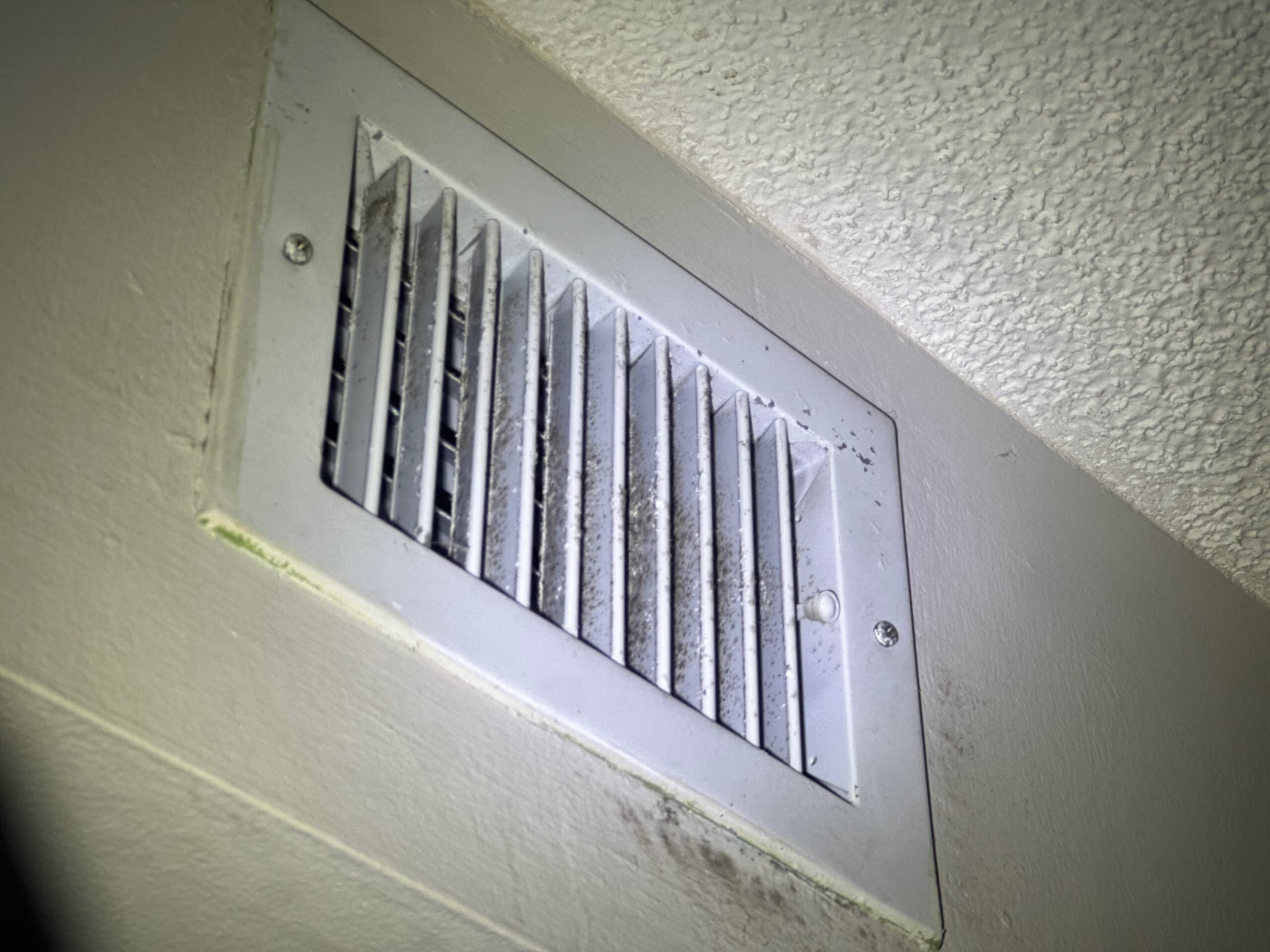
If you’ve spotted dark spots, fuzzy growth, or discoloration around your air vents, you’re dealing with more than a cosmetic issue. Mold around HVAC vents is a warning sign that something in your ventilation system or indoor environment is creating conditions for mold to thrive—and ignoring it can lead to serious health risks and costly damage. This guide will help you understand why mold grows around vents, what’s really going on inside your ductwork, and what steps you should take to fix the problem for good.
Why Does Mold Grow Around Air Vents?
Mold needs three things to grow: moisture, organic material, and warm temperatures. Unfortunately, your HVAC system can provide all three—especially in humid climates like South Florida.
1. Condensation From Temperature Differences
The most common cause of mold around vents is condensation. When cold air from your AC meets warm, humid air near the vent opening, moisture forms on and around the vent cover. Over time, that moisture feeds mold growth on the vent itself, the surrounding drywall, and even inside the ductwork. This is especially common on supply vents in rooms with poor insulation or where the duct runs through a hot attic space. In Palm Beach County, where summer humidity regularly exceeds 70%, condensation-driven mold is one of the most frequent issues we encounter during duct inspections.
2. Excess Humidity in Your Home
If your indoor humidity levels are above 60%, your entire HVAC system is at risk for mold. High humidity can result from oversized AC units that short-cycle (cool air quickly without removing enough moisture), poor ventilation in kitchens and bathrooms, lack of a whole-home dehumidification system, or attic humidity seeping through ductwork joints. A hygrometer can help you monitor indoor humidity. Ideally, you want to keep it between 30–50% to prevent mold growth.
3. Dirty or Contaminated Ductwork
Dust, debris, dead skin cells, and pet dander that accumulate inside air ducts provide the organic material mold needs to colonize. If your ducts haven’t been cleaned in years—or if you’ve had a previous water intrusion event—mold spores may already be established inside the system, using the airflow to spread throughout your home. According to the EPA, mold can begin growing on damp surfaces within 24–48 hours. Once it’s in your ductwork, every time your AC kicks on, it’s distributing spores into every room.
4. Leaky or Poorly Insulated Ducts
Ductwork that runs through unconditioned spaces like attics or crawlspaces is especially vulnerable. If the ducts have leaks, gaps, or insufficient insulation, warm humid air infiltrates the system and creates perfect conditions for mold. In South Florida, we frequently find flex duct that has deteriorated from heat exposure in attics—the outer vapor barrier breaks down, insulation compresses, and condensation forms directly on the inner liner. This is a mold factory hiding above your ceiling.
5. Oversized or Improperly Installed HVAC Systems
An AC system that’s too large for your home will cool the air rapidly but won’t run long enough to properly dehumidify. This “short cycling” leaves excess moisture in the air, which then condenses around vents, inside ducts, and on evaporator coils. It’s one of the most overlooked causes of mold in residential HVAC systems.
Health Risks of Mold Around Vents
Mold around your vents isn’t just unsightly—it can be genuinely harmful. The CDC reports that exposure to mold can cause nasal stuffiness, throat irritation, coughing or wheezing, eye irritation, and skin irritation. For people with asthma, mold allergies, or compromised immune systems, exposure can trigger severe reactions including respiratory infections. Because your HVAC system circulates air throughout your entire home, mold in or around your vents means every room is potentially affected—even if you only see visible growth in one area.
What To Do If You Find Mold Around Your Vents
Step 1: Don’t Just Wipe It Off
Surface cleaning mold off a vent cover without addressing the root cause guarantees it will come back. The visible mold is often just the tip of the iceberg—the real problem is usually moisture and contamination inside the ductwork or HVAC system.
Step 2: Check Your Humidity Levels
Use a hygrometer to measure your indoor humidity. If it’s consistently above 55–60%, you have a moisture problem that needs solving before any mold remediation will stick. Solutions may include a whole-home dehumidifier, attic dehumidification, or HVAC system adjustments.
Step 3: Inspect Your Ductwork
Have a professional inspect your ducts for leaks and disconnected joints, especially in the attic. Also check for crushed or sagging flex duct that traps condensation. Look for visible mold growth inside the duct liner and check insulation condition on duct runs through unconditioned spaces. A camera inspection can reveal contamination that’s invisible from the outside.
Step 4: Schedule Professional Mold Remediation
If mold is confirmed in your ductwork, surface cleaning isn’t enough. Professional remediation typically involves HEPA-vacuuming all duct surfaces to remove spores, applying EPA-registered antimicrobial treatments, replacing any duct sections with embedded mold growth (especially porous flex duct or duct board), and cleaning the air handler, evaporator coil, and drain pan.
Step 5: Address the Root Cause
After remediation, preventing recurrence requires fixing the moisture source. This might mean repairing or replacing damaged ductwork, adding or upgrading duct insulation, installing a dehumidification system, correcting HVAC sizing issues, or improving attic ventilation and vapor barriers.
When Is It Time to Replace Your Ducts Instead of Cleaning Them?
In many South Florida homes, the ductwork itself is the problem. Here’s when replacement makes more sense than cleaning: Flex duct over 15 years old: The inner liner deteriorates, the insulation compresses, and the vapor barrier breaks down. Once mold penetrates the duct material itself, no amount of cleaning will fully resolve it. Duct board with water damage: Fiberglass duct board is porous. If it’s been exposed to moisture or mold, it cannot be effectively cleaned and must be replaced. Sheet metal ducts with intact liners: These can often be cleaned and saved, making them the most durable long-term option for duct replacement. The choice between flex duct, duct board, and sheet metal depends on your home’s layout, budget, and long-term goals. A qualified contractor can help you evaluate the options.
NADCA Standards: Cleaning vs. Replacement
The National Air Duct Cleaners Association (NADCA) provides guidelines for when ductwork should be cleaned versus replaced. In general, if contamination is limited to surface-level dust and debris, professional cleaning following NADCA standards is appropriate. However, if there’s visible mold growth embedded in porous duct materials, or if the ductwork has sustained water damage, replacement is the recommended course of action. At GreenFox, we follow NADCA standards for every inspection and cleaning, and we’ll always give you an honest assessment of whether your ducts can be saved or need to be replaced.
Why South Florida Homes Are Especially Vulnerable
Palm Beach County’s climate creates a perfect storm for duct-related mold. Average humidity levels of 70–80% during summer months combined with attic temperatures exceeding 140°F create extreme condensation potential. Many homes were built with flex duct that has a limited lifespan in this environment, and older AC systems may not adequately dehumidify. If you live in Lake Clarke Shores, West Palm Beach, Jupiter, Boynton Beach, or anywhere in Palm Beach County, your ductwork is fighting a constant battle against moisture. Learn more about mold in ductwork in Palm Beach County and what you can do about it. Proactive maintenance and proper insulation are your best defenses.
When to Call the Professionals
At GreenFox Air Quality, we specialize in identifying and eliminating mold in HVAC systems. Our process includes comprehensive duct inspection with camera technology, indoor air quality testing to measure mold spore levels, NADCA-standard Palm Beach County duct cleaning with HEPA-filtered equipment, professional mold remediation for contaminated systems, and duct repair or full system replacement when needed. We don’t just treat the symptom—we find and fix the source. Whether it’s condensation from leaky ducts, humidity from an undersized dehumidifier, or deteriorated flex duct in your attic, we’ll develop a plan that solves the problem permanently.
Final Thoughts: Mold Around Vents Is a System Problem, Not a Surface Problem
Visible mold around your vents is your home telling you something is wrong with your HVAC system, your humidity control, or both. The longer you wait to address it, the more it spreads—through your ducts, into your walls, and into the air your family breathes. Don’t just wipe it away and hope for the best. Contact GreenFox Air Quality today to schedule a comprehensive duct inspection and mold assessment. Let’s get your air system clean, safe, and mold-free.
