
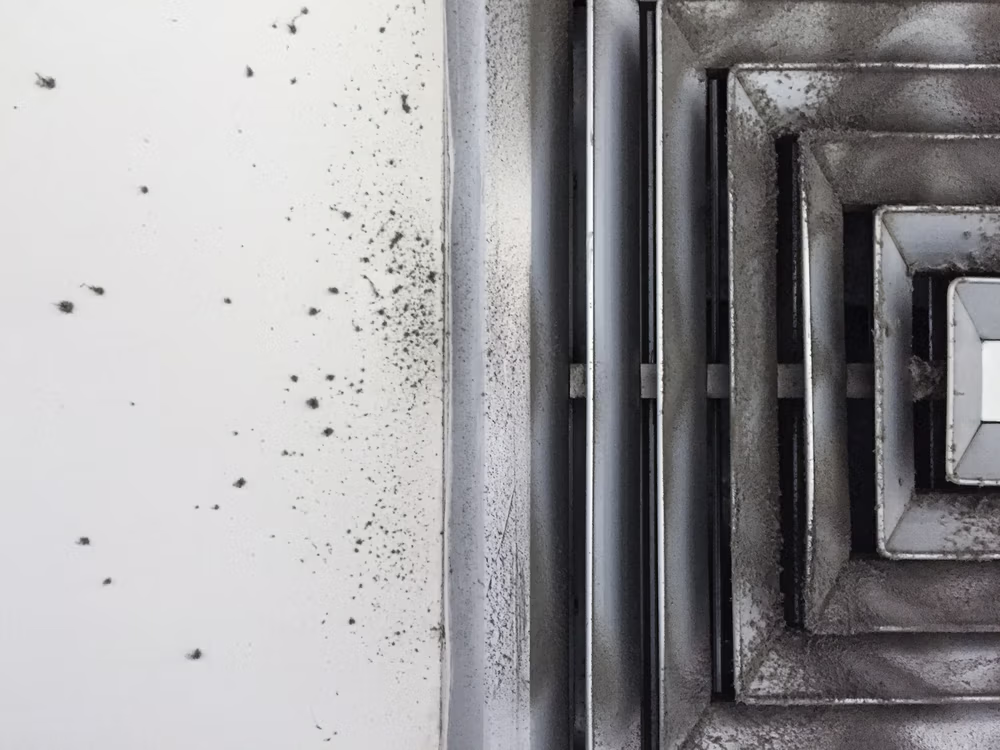
Black Dust Around Your Air Vents: Mold, Soot, or Something Else?
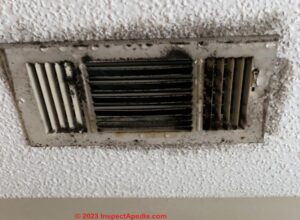
Have you noticed dark, sooty streaks or smudges gathering around your air vents? You’re not alone, and you’re right to want answers. That black residue might mean nothing more than ordinary dust buildup, or it could signal a bigger issue like mold growth, soot contamination, or even a wiring problem. Here’s how to figure out what you’re really dealing with.
Why Black Residue Shows Up Around Vents
Air vents constantly push or pull air through your home, and that air carries whatever particles are floating around with it — dust, fibers, skin cells, cooking residue, and outdoor pollutants. Over time, these particles collect on the surfaces near the vent opening, especially where airflow slows down or where static electricity draws particles to the wall. The result: a ring or smudge of dark buildup that seems to appear out of nowhere.
But not all black residue looks or behaves the same way. The color, texture, and location can tell you a lot about the source.
Dust causes most cases, and it’s also the least concerning. As air moves through your ductwork, it picks up dust, pet dander, and fine debris. When this dust settles near a vent — particularly a return vent, which pulls air (and everything in it) toward the filter — moisture and oils from skin and cooking can darken it over time.
Signs you’re dealing with dust:
- The residue looks grayish rather than truly black
- It stays dry and powdery, and wipes away easily
- It concentrates more heavily around return vents than supply vents
- No musty or burnt smell accompanies it
Possibility 2: Mold Growth
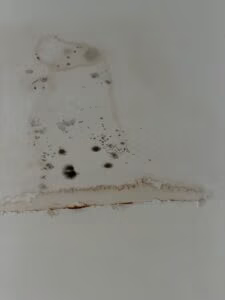
Mold poses a more serious risk, especially if your ductwork has picked up moisture from condensation, a leak, or high indoor humidity. Certain molds, including some strains of Cladosporium and, less commonly, Stachybotrys (often called “black mold”), form dark, sometimes fuzzy or slimy patches.
Signs you’re dealing with mold:
- The residue looks damp, fuzzy, or textured rather than flat and powdery
- A musty, earthy odor lingers near the vent
- The buildup returns quickly after you clean it
- You’ve dealt with recent humidity issues, a leaky roof, or condensation problems near the ductwork
- Household members are experiencing unexplained allergy symptoms, coughing, or respiratory irritation
If you suspect mold, have an HVAC professional inspect the system rather than cleaning it yourself — disturbing mold can release spores into the air.
Possibility 3: Soot
Incomplete combustion produces soot, a black, oily, often greasy residue. If your home has a fireplace, gas furnace, candles, or even a poorly ventilated stove, soot particles can enter your HVAC system and settle around vents.
Signs you’re dealing with soot:
- The residue feels slightly greasy or oily to the touch
- It smudges easily and leaves a dark mark on your fingers
- You burn candles regularly, especially scented or paraffin-based ones
- You own a fireplace, wood stove, or gas appliance
- The staining shows up more on ceiling vents (soot tends to rise)
Regular candle burning causes more black soot deposits than most people realize — the particles travel through HVAC systems easily and settle on walls and vent covers throughout the house.
Possibility 4: Something Else Entirely
A few less common culprits are also worth ruling out:
- Carbon buildup from a dirty furnace or filter — a furnace that doesn’t burn fuel cleanly can send fine carbon particles through the ducts.
- Toner or ink dust — if a home office or printer room shares ductwork with the vent in question, toner particles can occasionally cause the staining.
- Electrical or overheating issues — in rare cases, black residue near a vent (especially paired with a burning smell) can point to an electrical problem in nearby wiring. Call a professional immediately if you suspect this.
How to Narrow It Down
- Examine the texture. Dry and powdery points to dust; greasy points to soot; fuzzy or damp points to mold.
- Smell it. A musty smell suggests mold; a smoky or waxy smell suggests soot; no smell at all often points to plain dust.
- Check the location. Mold tends to show up near moisture sources; soot often accumulates on ceiling vents; dust favors return vents.
- Track the timeline. If the residue reappears quickly after cleaning, that pattern points to an active source like mold growth or a combustion issue rather than passive dust accumulation.
- Check your HVAC filter. A dirty, clogged filter often drives the problem regardless of what the residue turns out to be, since it lets more particles bypass filtration and settle throughout the home.
When to Call a Professional
A little dust rarely warrants concern, but call an HVAC technician or an indoor air quality specialist if:
- You suspect mold, especially alongside a musty smell or visible texture
- The residue keeps returning despite regular cleaning
- Household members develop new or worsening respiratory symptoms
- You notice a burning smell alongside the residue
- Your ductwork hasn’t seen an inspection or cleaning in several years
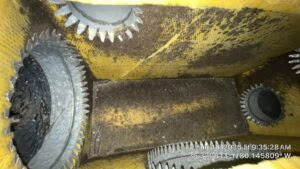
A professional can inspect inside the ductwork itself, test for mold if needed, and pinpoint whether the source lies in your HVAC system, an appliance, or something environmental.
If you’d rather skip the guesswork entirely, Greenfox Air Quality can tell you exactly what’s behind that residue. Our team inspects your ductwork, vents, and AC system directly and gives you a clear, honest answer — dust, mold, soot, or something else. Contact us today to schedule a site visit, available for $325 per AC system.
Don’t let uncertainty linger. Take a close look at the residue around your vents today, run through the checks above, and if anything points toward mold, soot buildup, or an electrical issue, reach out to a trusted HVAC professional before it becomes a bigger — and more expensive — problem. A little attention now keeps the air in your home clean and your system running the way it should.
